
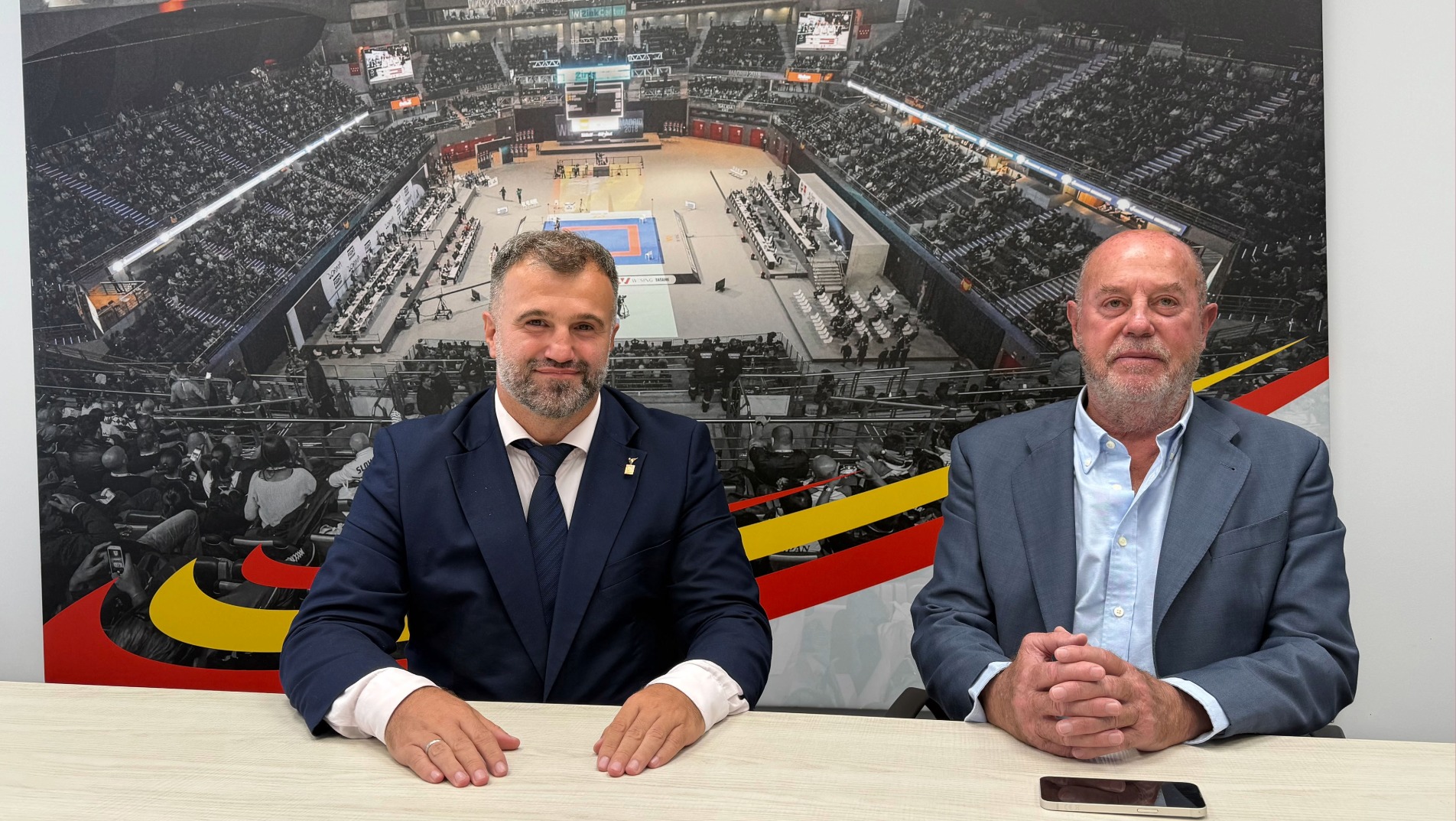
In Madrid, at the headquarters of the World Karate Federation, President Antonio Espinós welcomed Ivan Dutchak, President of the Ukrainian Karate Federation, for a meeting the world governing body placed under two clear headings: the development of karate in Europe and the preparations for upcoming international events. The account published by the WKF on 1 October 2026 is brief, yet it offers a revealing glimpse of how the sport is steered away from the competition halls, through patient conversation between the global federation and its national members.
A dialogue that spans the karate world
The visit, the WKF explains, belongs to the regular institutional meetings and contacts that Espinós maintains with representatives of National Federations from around the world. Such encounters are meant to sustain an ongoing dialogue with the members of the karate community, and they provide a setting in which to address the key developments affecting the sport at national, continental and international level. The official photograph captures the tone of the occasion: the two presidents seated side by side at a table, a vast image of a packed karate arena stretching across the wall behind them, as if to remind everyone in the room where all this work eventually leads.
"One of the powerhouses of Karate in Europe"
Espinós chose words of recognition to frame the visit. "I would like to thank Mr Dutchak for taking the time to visit the WKF Headquarters in Madrid. Ukraine is one of the powerhouses of Karate in Europe, not only because of its outstanding sporting achievements, but also because of the remarkable participation records of Ukrainian athletes in international events," the WKF President said.
The tribute rests on two pillars, and Espinós named both. The first is performance, the results earned in competition. The second is presence, the sustained commitment of Ukrainian athletes to the international circuit. In the president's reading, a federation's standing is measured not only by what its karateka achieve on the tatami, but also by how consistently they show up to compete.
Listening to the region
The second part of his remarks shifted the emphasis from praise to method. "The meeting with Mr Dutchak gave us the chance to be updated on the situation of karate in the region and helps us support the continued growth and development of Karate in Europe and worldwide," Espinós added.
The phrasing makes plain that Madrid was as much a place for listening as for speaking. According to the WKF, Dutchak and Espinós reviewed the situation of karate in Europe and around the world, linking a regional picture, delivered first-hand by a national president, to the wider strategy of the global federation. It is the kind of exchange that rarely makes headlines, but on which the long-term growth of a sport quietly depends.
A season nearing its finale
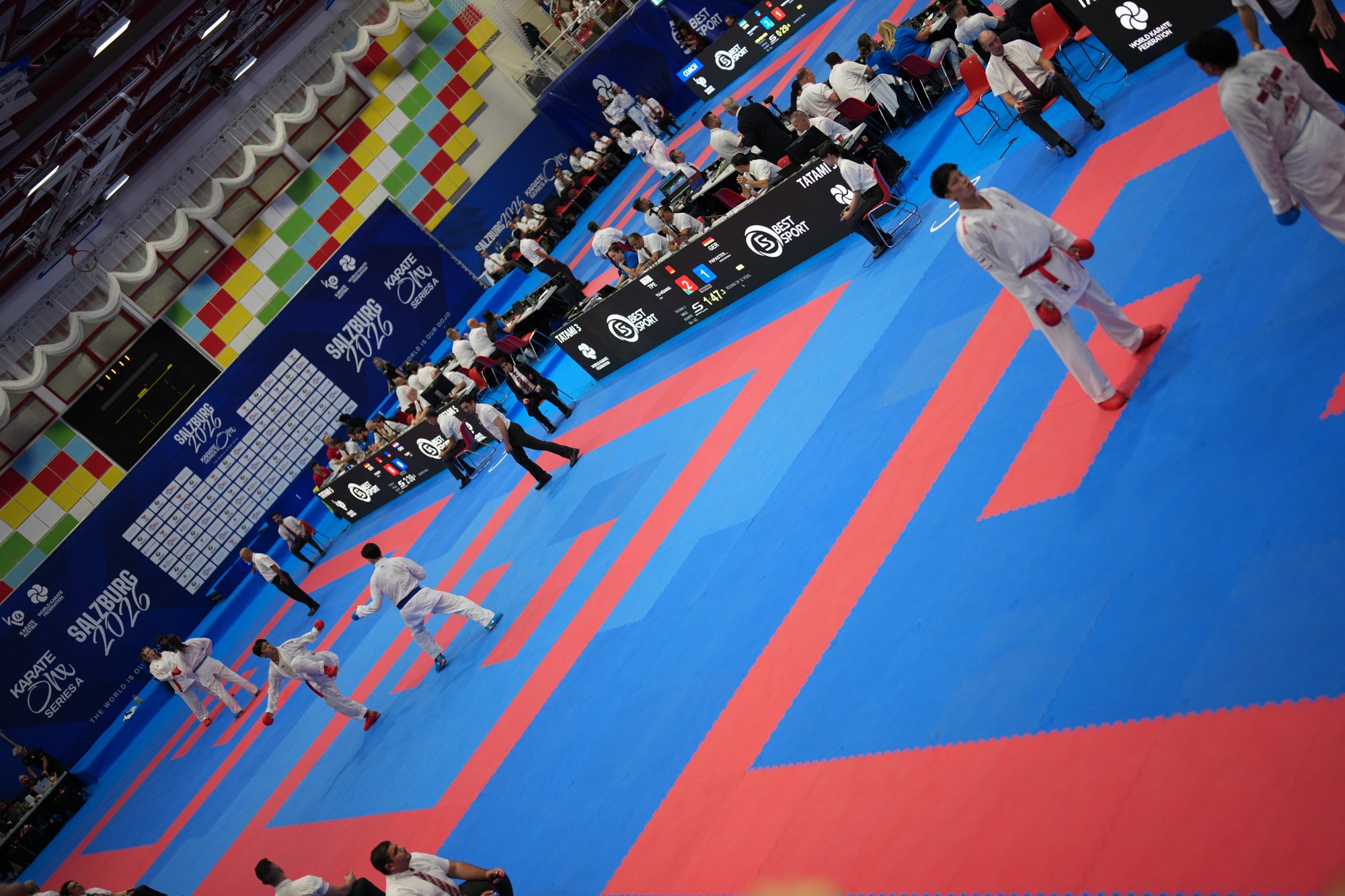
The meeting was reported as the international calendar entered a busy stretch. On the same day, the WKF published its guide to the Karate One Series A in Salzburg, the fourth and final stop of the 2026 season, scheduled from 2 to 4 October at the Sporthalle Alpenstrasse, with more than 1,200 athletes from 82 countries registered across all senior individual categories in kata and kumite, as well as male and female team kata. The WKF did not specify which upcoming events were discussed in Madrid, but the scale of the Salzburg gathering illustrates the demands of a circuit for which national federations must prepare.
What emerges from the Spanish capital, then, is less a headline announcement than a statement of method: dialogue as a working tool, and Ukraine's place among Europe's leading karate nations affirmed by the WKF President himself.
Sources
- WKF: WKF President Antonio Espinós Welcomes Ukrainian Karate Federation President in Madrid (1 October 2026)
- WKF: All You Need to Know About Karate One Series A Salzburg (1 October 2026)
Photo: wkf.net