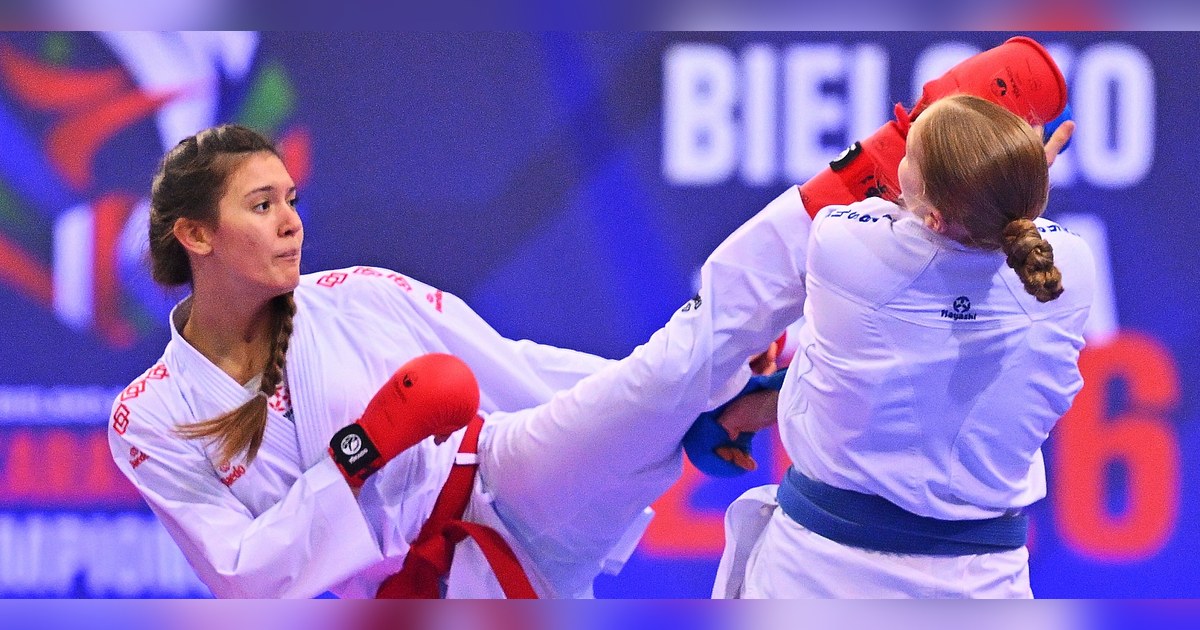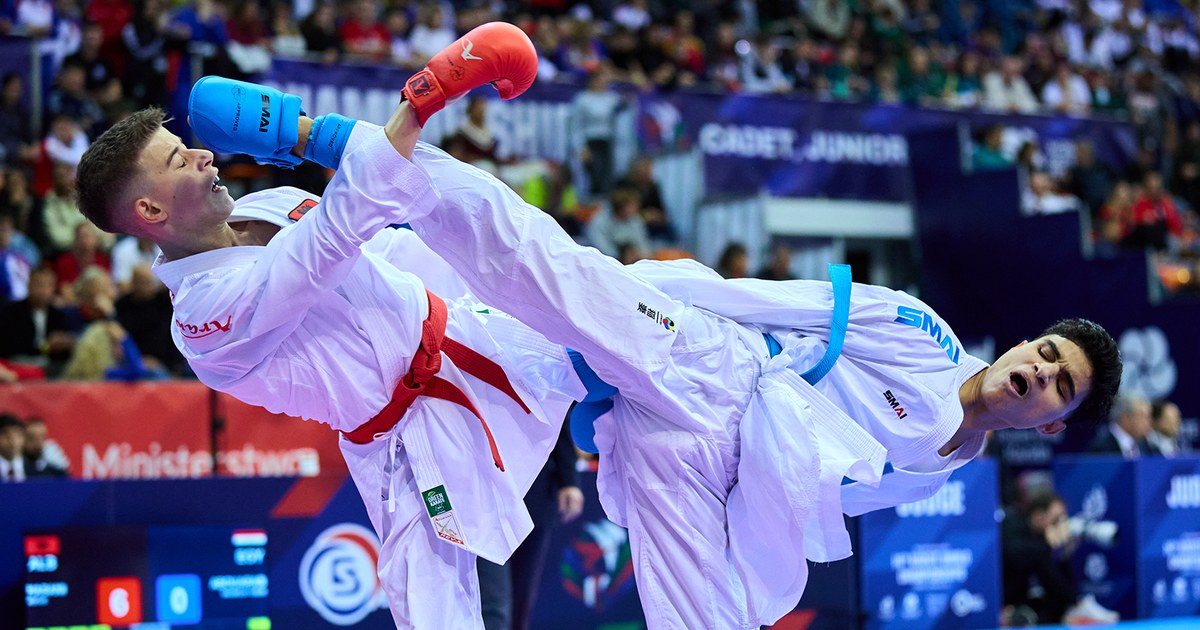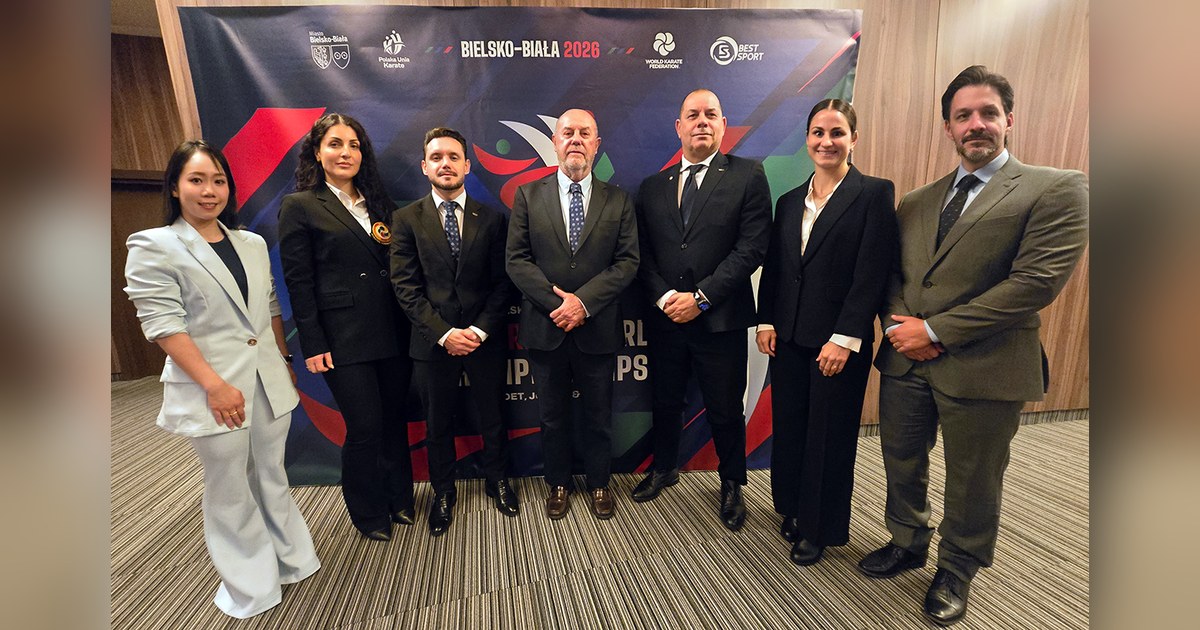

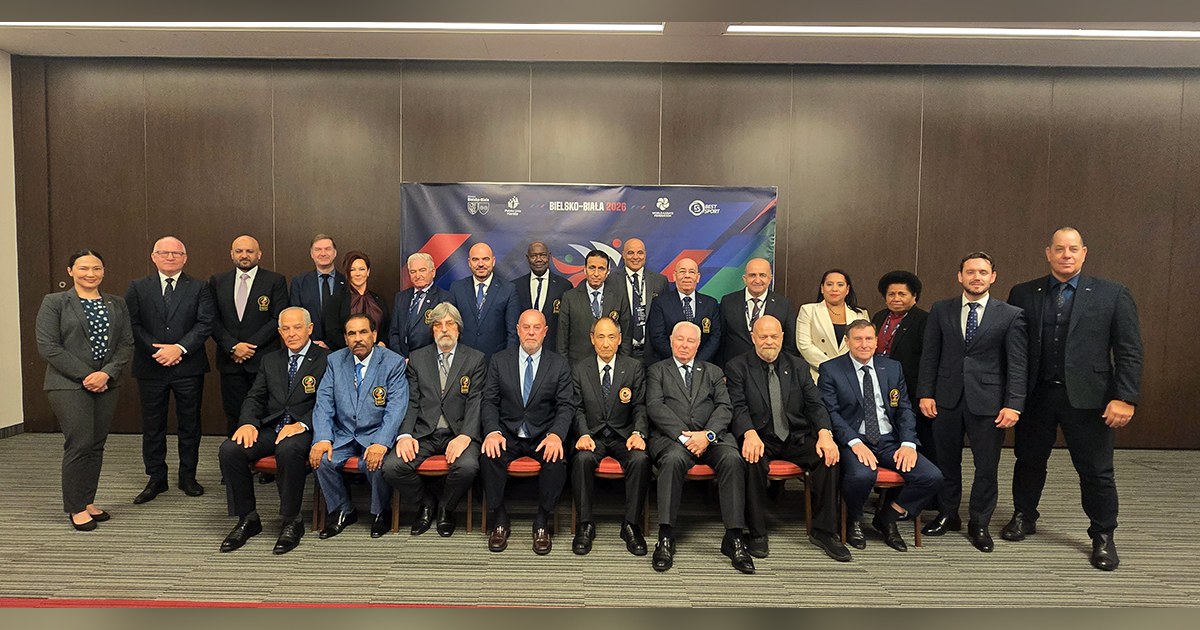
While the world's cadets, juniors and under-21 athletes were fighting for places in the finals on the tatami of Bielsko-Biała, the World Karate Federation was settling its own line-up in a meeting room nearby. The new WKF Executive Committee, elected by the Congress on Tuesday 13 October, met in the Polish city during the 2026 World Cadet, Junior & U21 Championships and agreed a redistribution of its key positions. The WKF speaks of "the beginning of a new era". Read closely, the decisions draw a line between one generation of administrators and the next without breaking the thread that runs between them.
Three new roles at the top
From 1 January 2027, Davide Benetello of Italy will serve as First Vice President, Davor Cipek of Croatia as General Secretary and Elisa Au of the United States as Assistant General Secretary. These three appointments are the heart of the change. Benetello takes up the role after leading the WKF Athletes' Commission, a chair that has just passed to Douglas Brose, as we reported in our article on that handover. Cipek succeeds Toshihisa Nagura at the head of the secretariat. Au, who joins the Executive Committee as the co-opted representative of the Pan American Karate Federation (PKF), steps directly into one of its officer posts.
Around them, the structure holds steady. Michael Dinsdale of Great Britain continues as General Treasurer and Souleymane Gaye of Senegal as Assistant General Treasurer. Wolfgang Weigert of Germany remains Vice President and Commissioner for Para Karate and Refugees, and Gunnar Nordahl of Norway stays on as Executive Vice President and Sports Commissioner. The presidents of the Asian, Oceania and Pan American confederations continue as vice presidents without rank, and Bechir Cherif of Tunisia continues as WKF vice president.
Twelve years of Toshihisa Nagura
The name that gives the meeting its weight belongs to a man leaving a post rather than taking one. Toshihisa Nagura of Japan has been the WKF's General Secretary for twelve years, and at Tuesday's Congress it was he who presented the General Secretary's report. WKF President Antonio Espinós devoted the warmest part of his remarks to him.
"I also want to express my heartfelt thanks to Toshihisa Nagura for his 12 years as General Secretary," Espinós said. "During this period, the WKF has experienced unprecedented progress, made possible in large part by his outstanding work, vision and dedication. His contribution was instrumental in our Olympic debut in his home country of Japan, a milestone in the history of karate."
The farewell is only partial. The Congress re-elected Nagura to the Executive Committee as one of the Asian Karate Federation's members, and Espinós said the federation was "pleased and proud that he will remain a member of the Executive Committee until 2030, continuing to contribute his experience to the federation." The man who held the secretariat through the Olympic years will keep his seat at the table while his successor settles into the role.
Continuity and renewal
That pairing of experience and new energy is how the President framed the whole meeting. "The new appointments recognise individuals who have demonstrated hard work and commitment, while opening the door to a new generation bringing a modern and innovative approach to the WKF," Espinós said. "This balance of experience, fresh ideas and shared responsibility will be essential as we continue developing our sport worldwide."
The committee elected by the Congress spreads that balance across the continents: four members from Asia, six from Europe, one from Oceania, three from the Americas and three from Africa. Brose, newly chosen by his fellow athletes, becomes a full member in his own right, bringing the competitors' voice directly into the federation's highest decision-making body.
As the WKF Statutes allow, the Executive Committee also co-opted representatives of the continental confederations: Rashid Al Ali of the United Arab Emirates for Asia, Jiri Bocek of Czechia for Europe, Daniel Eoe of Nauru for Oceania and Elisa Au for the Americas. Three further members were co-opted: Makarita Lenoa of Fiji and Sarah Wennerström of Sweden under the female quota, and Mohamed Mouktabil of Morocco.
The session also heard reports from the commissions: Rafael Arriaza for the Medical and Scientific Commission, Souleymane Gaye for the Athletes' Entourage Commission, Dusana Agustovicova and Commissioner Wolfgang Weigert for Para Karate, and Mohamed Elhosieny for the Technical Commission.
A week of decisions
The meeting completed a week in which Bielsko-Biała served as the federation's capital as well as its arena. The Congress had already elected the new committee and ratified the next major events, among them the final phase of the 2027 World Championships in Milan and Bergamo, which we covered in our Congress report. As the youth championships hand out their medals on Saturday and Sunday, the young athletes on the tatami and the officials who will shape their competitions in the years ahead share the same city for a few more days.
Espinós summed up the direction in a single sentence: "These decisions place our federation firmly on the pathway to the future."
Sources
- World Karate Federation, WKF Executive Committee Opens New Era of Progress at Crucial Meeting, 16 October 2026
- World Karate Federation, WKF Congress Elects New Executive Committee and Confirms Major Events for 2027 and 2028 as Progress of Karate is Highlighted, 14 October 2026
- World Karate Federation, WKF Athletes' Commission Meets in Bielsko-Biala and Appoints Douglas Brose as New Chair, 14 October 2026
Photo: wkf.net