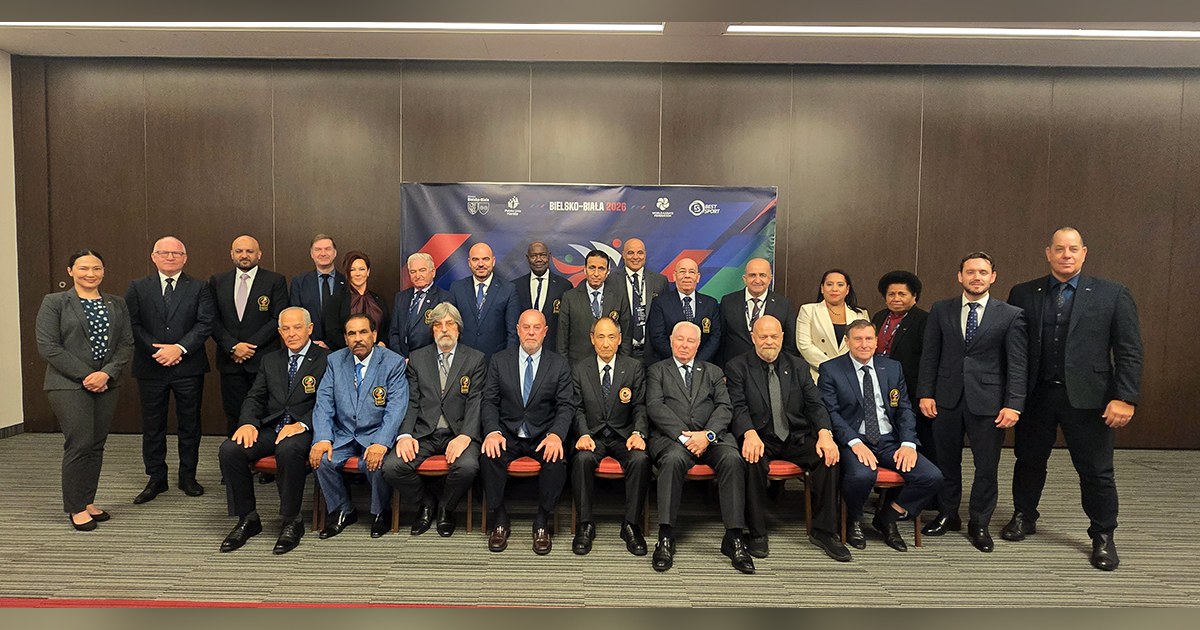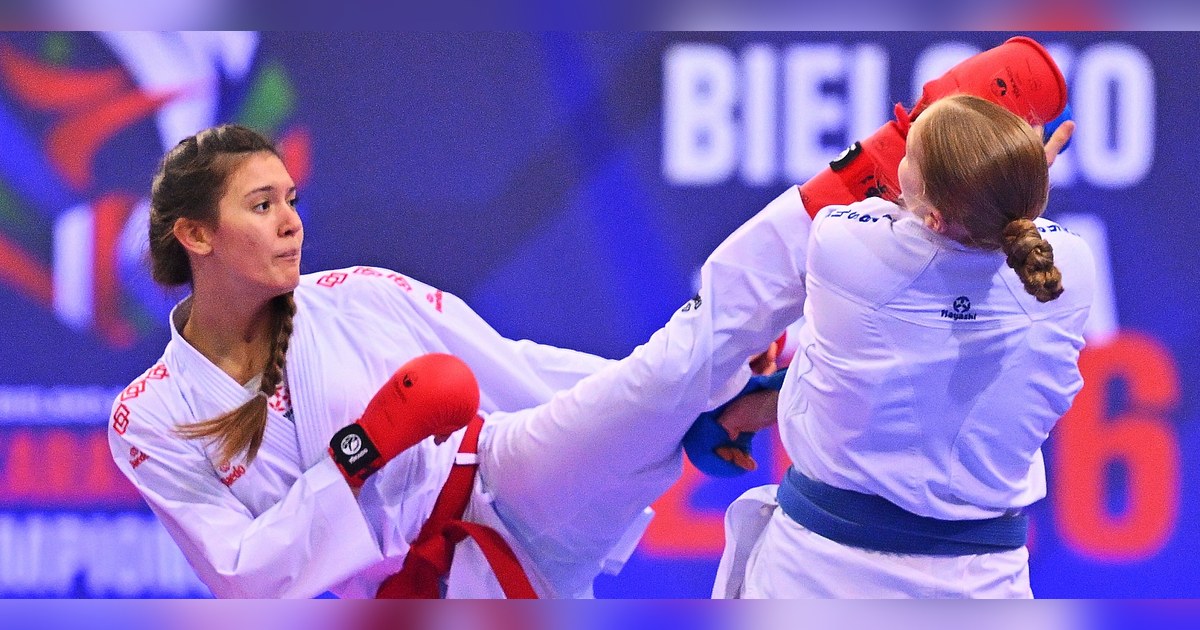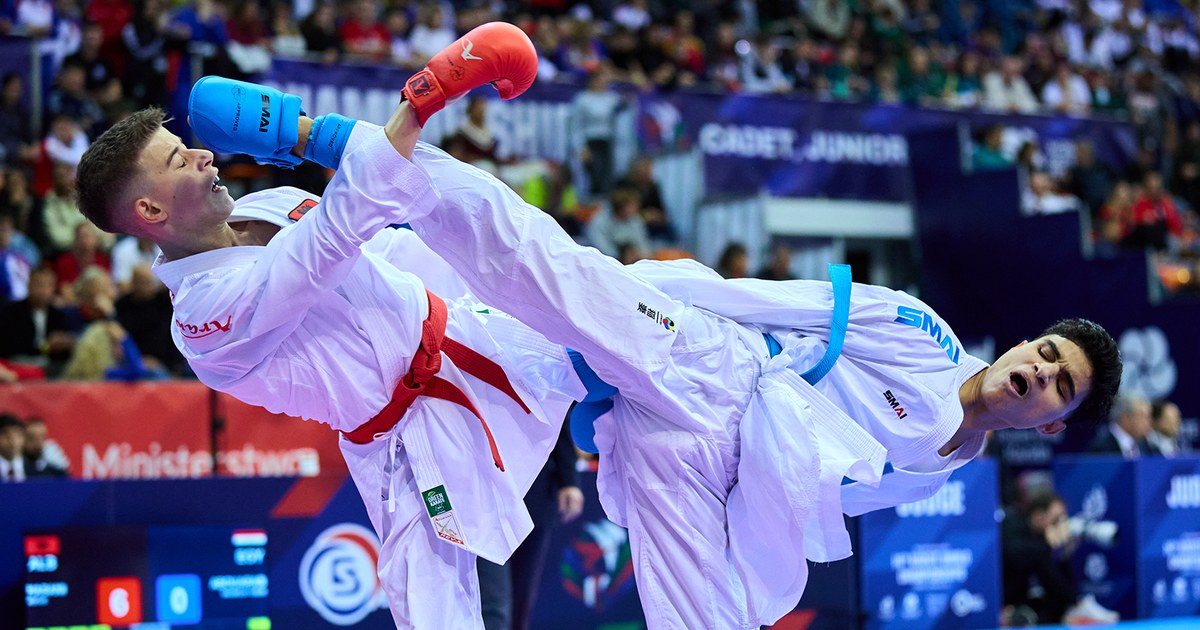

While cadets, juniors and under-21s chased world titles on the tatami of Bielsko-Biała, another kind of preparation was taking place around a white conference table. The Brisbane 2032 Supervisory Board of the World Karate Federation met in the Polish city during the 2026 World Cadet, Junior and U21 Championships to review the action plan supporting karate's Olympic prospects. Chaired by WKF President Antonio Espinós, the meeting looked at the next steps of the campaign and at what the federation calls the opportunities created by recent developments in the Olympic movement.
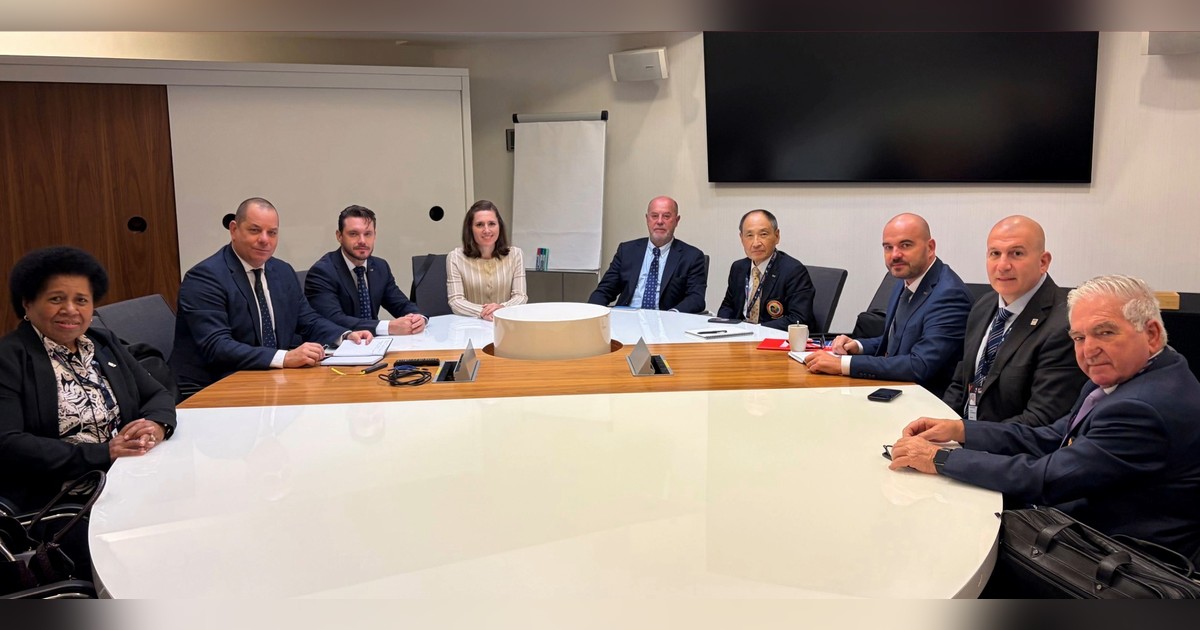
Nine people around one table
The official photograph tells much of the story. Around the table sit the executive committee members Makarita Lenoa, Davide Benetello and Douglas Brose; Sara Wolff, WKF CEO and Olympic Bid Leader; President Espinós; General Secretary Toshihisa Nagura and Assistant General Secretary Davor Cipek, the two men between whom the secretariat will pass on 1 January 2027, as our article on the new Executive Committee recounted. Completing the circle are Hani Zahra, president of Karate Australia, and Michael Kassis, WKF Vice President and President of the Oceania Karate Federation.
Their presence needs no commentary. The Games under discussion will be held in Queensland, and the karate of the host country and of its continent was represented at the table where the campaign is reviewed.
One item on the agenda concerned a familiar face. The Board noted the appointment of Douglas Brose as the new chair of the WKF Athletes' Commission and as a member of the Executive Committee, a choice we described earlier this week. In the WKF's words, his inclusion strengthens athlete representation and reinforces the athlete-focused approach of the campaign. A former world champion now sits among those preparing the file.
What the IOC will look at
The heart of the meeting lay elsewhere, in the changing rules of the Olympic game. Members reviewed developments linked to the International Olympic Committee's Fit for the Future initiative, the strategic direction endorsed at the 146th IOC Session in Lausanne on 24 June 2026, which sets the IOC's course through to 2032. They examined its implications for karate's bid, as well as the new opportunities the WKF sees in the discipline-based evaluation process and in the reforms to the Olympic Charter. The mechanics of that process, and karate's place within it, were set out in our article of 22 September; what Bielsko-Biała added was the federation's own reading of them.
That reading begins with three criteria the meeting singled out as important in the evaluation of the Olympic programme: global relevance, cost and organisational complexity. Each of them translates into concrete questions of venues, budgets and audiences. The Board discussed them alongside what the WKF considers karate's strengths: its worldwide reach, its established structures and its potential to deliver meaningful social benefits.
The words that matter
After the meeting, Espinós thanked the members of the Supervisory Board for their commitment and work in support of karate's Olympic hopes. Then he defined the task: "We must ensure that the decision makers recognise the tremendous progress our sport has made at every level. Equally important, we must demonstrate how Karate's values, social legacy and positive impact on society can contribute to the Olympic movement."
The two sentences sketch a double case. The first concerns the sport itself, its competitions and its organisation. The second concerns what karate brings beyond the tatami, a theme the WKF has long tied to its social legacy programmes. The federation presents the meeting as another step in its ongoing efforts, and as a reminder of the importance of presenting the full value of karate: its progress, but also its standards and its positive impact on communities around the world.
The WKF account sets no date for a decision. The campaign moves at the measured tempo of institutions, one meeting after another, and this one took place in the middle of a world championship for young competitors, among the athletes for whom an Olympic tatami remains, for now, a horizon.
Sources
- World Karate Federation, WKF Reviews Brisbane 2032 Olympic Prospects at Supervisory Board Meeting, 16 October 2026
- International Olympic Committee, "Fit for the Future": IOC Session sets strategic direction to ensure that the Olympic Movement remains strong, relevant and impactful, 24 June 2026
- World Karate Federation, WKF Executive Committee Opens New Era of Progress at Crucial Meeting, 16 October 2026
- World Karate Federation, WKF Athletes' Commission Meets in Bielsko-Biala and Appoints Douglas Brose as New Chair, 14 October 2026
Photo: wkf.net