When an equipment house steps onto the team stage
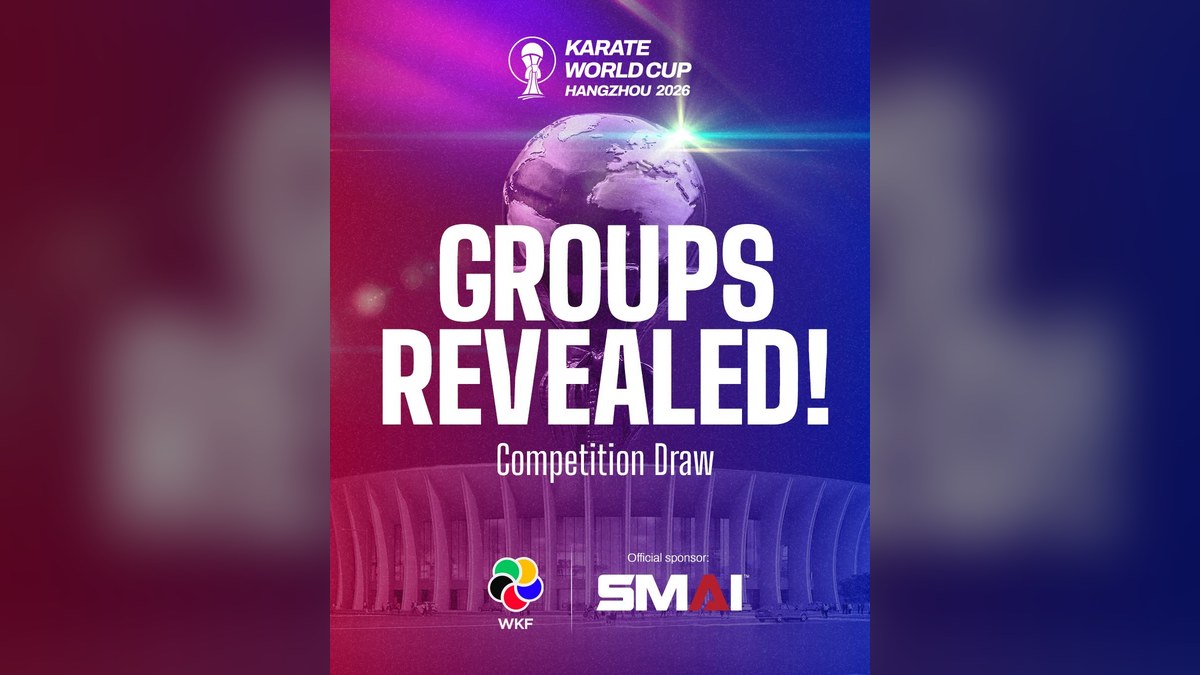
On 3 September 2026, the World Karate Federation announced that SMAI will serve as Official Sponsor of the 2026 Karate World Cup. The news arrives with the calendar already set: Hangzhou, China, from 20 to 22 November, under the banner #KarateWorldCup2026. It is not a side partnership attached to a peripheral meet. It places a long-standing WKF-approved equipment brand at the centre of the Federation’s highest stage for national teams—an event that now exists as a distinct flagship after karate’s senior world calendar was deliberately redrawn.
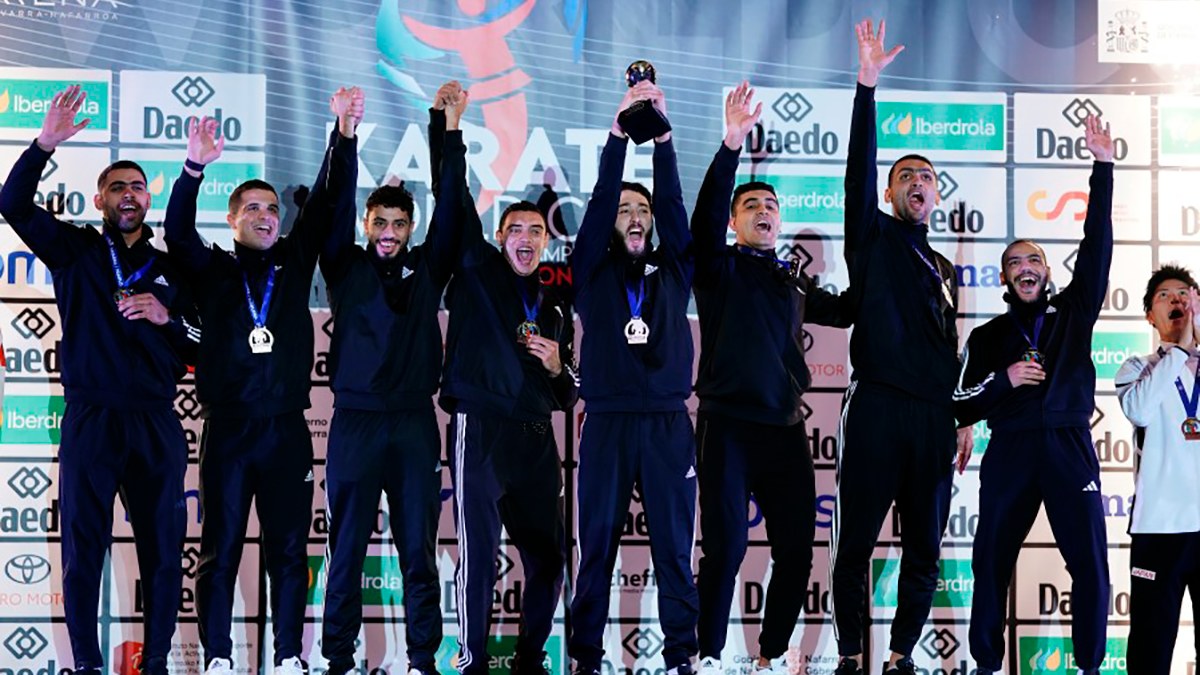
That redraw matters for reading the sponsorship. For decades, the traditional World Senior Championships gathered individuals and teams under one roof. The WKF later separated that structure into two major pillars: the Individual Karate World Championships on one side, and the Karate World Cup for national teams on the other. The World Cup is therefore not a rebranded afterthought; it is the highest event dedicated to national-team competition in karate. Its first edition was held in Pamplona, Spain, in 2024. Hangzhou will be the second—two years later, on Chinese soil, with the same institutional weight and a clearer sense of identity for team kata and team kumite as disciplines in their own right.
What will unfold in Hangzhou is tightly framed. Eighty qualified national teams will gather. Only twenty teams per category earn the right to compete after qualification. The programme covers Female Team Kata, Male Team Kata, Female Team Kumite and Male Team Kumite—four categories that concentrate the essence of collective performance on the tatami. Team kata demands synchronised precision, breathing and rhythm that turn three athletes into a single form. Team kumite asks for rotation, tactics and the capacity to absorb pressure as a squad rather than as a string of isolated bouts. Both live or die on equipment that never distracts: a karategi that holds its shape under stress, protective gear that meets competition standards, the quiet reliability that lets coaches and athletes think only about the next sequence or the next exchange.
SMAI’s path to this stage began far from Hangzhou. Founded in Wollongong, Australia, in 1985, the company started by producing martial arts uniforms and boxing equipment for the clubs and dojos around it. More than forty years later it remains a family-owned and operated business, still organised around a simple founding belief: athletes deserve equipment they never have to think about, so they can focus on mastering their sport and reaching their full potential. That local craft has grown into an internationally recognised martial arts and fitness brand, with more than forty distributors worldwide and a portfolio of over three thousand products spanning martial arts, combat sports and fitness—from a beginner’s first kimono to gear trusted on a world-championship tatami.
The competitive link is older than this World Cup announcement. SMAI has been a WKF-approved brand since 2004, with its karate equipment meeting the standards required for use at WKF competitions around the world. Approval is not a marketing slogan; it is a technical gate that separates kit eligible for official competition from everything else. By the time the Federation named SMAI Official Sponsor of Hangzhou 2026, the brand had already spent more than two decades inside that gate—present in dojos and on tatami long before the World Cup existed as a separate event.
As Official Sponsor, SMAI will have a prominent presence throughout the Hangzhou event and across the WKF’s digital and promotional platforms, connecting the brand with athletes, National Federations and karate fans worldwide. The partnership does not invent a new role for an equipment house; it elevates an established WKF-approved manufacturer onto the calendar’s team flagship, where national colours, squad identity and collective performance define the weekend. In practical terms, it means the brand sits beside the athletes it was founded to serve, at the moment when those athletes represent their countries rather than themselves alone.
Reading the sponsorship against the World Cup’s short history clarifies the angle. Pamplona 2024 inaugurated the format; Hangzhou 2026 confirms that the split from the Individual Worlds was not a one-off experiment but a lasting architecture. Between those two editions, national federations have had to organise qualification pipelines that funnel eighty teams into twenty per category—a filter that makes every place on the tatami scarce and every bout consequential. An Official Sponsor stepping into that environment is not decorating a festival; it is attaching itself to a competition whose scarcity and clarity of purpose already shape how teams prepare through the year.
Equipment partnerships at this level also speak a quieter language than athlete endorsements. They speak of standards, of kit that can be worn without second-guessing under WKF rules, of a supply chain that reaches clubs and federations through dozens of distributors. SMAI’s story—from Wollongong workshops to a global network—maps onto karate’s own journey from local dojos to a calendar that now distinguishes individual brilliance from national-team depth. When the Federation places such a brand at the heart of Hangzhou, it links the daily material culture of the sport—karategi, protections, the feel of the tatami underfoot—to the weekend when national teams decide who stands highest in team kata and team kumite.
November will test that link in public. From 20 to 22 November 2026, Hangzhou will host the second Karate World Cup under #KarateWorldCup2026, with SMAI as Official Sponsor. The categories are set, the qualification numbers are known, and the institutional lineage from Pamplona is clear. What remains is the competition itself: eighty teams narrowed to twenty per category, four titles on the line, and an equipment partner whose WKF approval stretches back to 2004 now standing in the foreground of the Federation’s flagship stage for national teams.
Sources
- WKF news: SMAI named Official Sponsor of 2026 Karate World Cup (3 September 2026)
- WKF event page: 2026 Karate World Cup — Hangzhou
- WKF approved brand: SMAI
Featured image: official photograph from WKF article 3267 — 090326_smai.png. Credit: wkf.net / WKF.