The standing ovation began before the credits. On 21 September 2026, inside the Velodrome Section of the San Sebastián International Film Festival, the audience rose for Karateka while the film was still running — and stayed on its feet for more than ten minutes. That is how Sandra Sánchez remembers the night her life in kata crossed from the competition floor to a major international cinema stage.
The World Karate Federation reported the premiere on 25 September. For a sport whose Olympic chapter remains recent and unfinished in the public mind, a festival screening of this weight is not a side note. It is a change of register: the same athlete who once asked a packed arena to read her kata now asks a cinema crowd to sit with the years that made that kata possible.
From Talavera de la Reina to Olympic kata gold
Karateka follows Snchez from her beginnings in Talavera de la Reina, Spain, to the status of a global kata icon. The film traces a career that placed her among the most successful athletes in the sports modern history and that reached its Olympic peak in Tokyo 2020, where she won the women’s kata title and became the first Olympic champion in karate.
WKF’s account of the film keeps the frame clear: dedication on the long road from a Spanish hometown to the highest level of international competition, always in the company of coach and partner Jesús del Moral. That pairing — technical partnership and shared life — is not treated as decoration. It is the path the biopic puts on screen.
What the premiere adds is not a new medal list. It is a different audience. Festival-goers who may never have watched a kata final sat through the arc from Talavera to Tokyo. Karate people who already know the outline heard the room answer with an ovation that outlasted the final frames.
A night that spoke beyond the dojo
Snchez’s own words, carried by WKF, are the measure of what the screening meant to her:
“San Sebastián was incredibleeven before the movie ended, people started clapping, and they stood and applauded for over 10 minutes. My heart was bursting with so many emotions.
“I think this movie is going to get a lot of people talking about karate, and that makes me incredibly happy. But Karateka goes far beyond sports. Its about those times when life puts you to the test—when you fall, when you break, and when you have to decide how to get back up.
“And if anyone leaves the theater with just a little more strength to fight for themselves, to try again, or to believe they can still achieve what once seemed impossible, then this movie will have accomplished something far greater than simply telling my story.
“For many years, I tried to convey something special through my katas. Now it’s very exciting to discover that karate can continue to convey emotions through a screen and reach people who may have never set foot in a dojo.”
That last line is the magazine’s hinge. Kata has always been a language of timing, breath, and intention. The claim here is that the same emotional charge can travel through cinema not only to those who train, but to spectators who have never crossed a dojo threshold.
Honour for the karate world
WKF President Antonio Espinós framed the premiere as more than a personal milestone:
“The accomplishment of Sandra Sanchez’s biopic being featured at the San Sebastian Film Festival is a tremendous honour, not only for one of the most respected and successful members of our community, but also for the entire karate world.”
“Sandra embodies all of the core values that make karate such a unique discipline, and her life and career are a true example of the dedication, sacrifice, honour and respect of our sport. We are proud that her life and remarkable journey are being featured and celebrated at such a prestigious stage. We wish her and “Karateka every success with the global release of the film.”
The language is institutional, but the stakes are cultural. A Velodrome Section slot at San Sebastián places a karate life story inside one of the world’s most watched festival calendars. Visibility of that kind does not replace competition results; it widens the circle of people who can recognise what those results cost.
Cast, director, crew — present, unnamed here
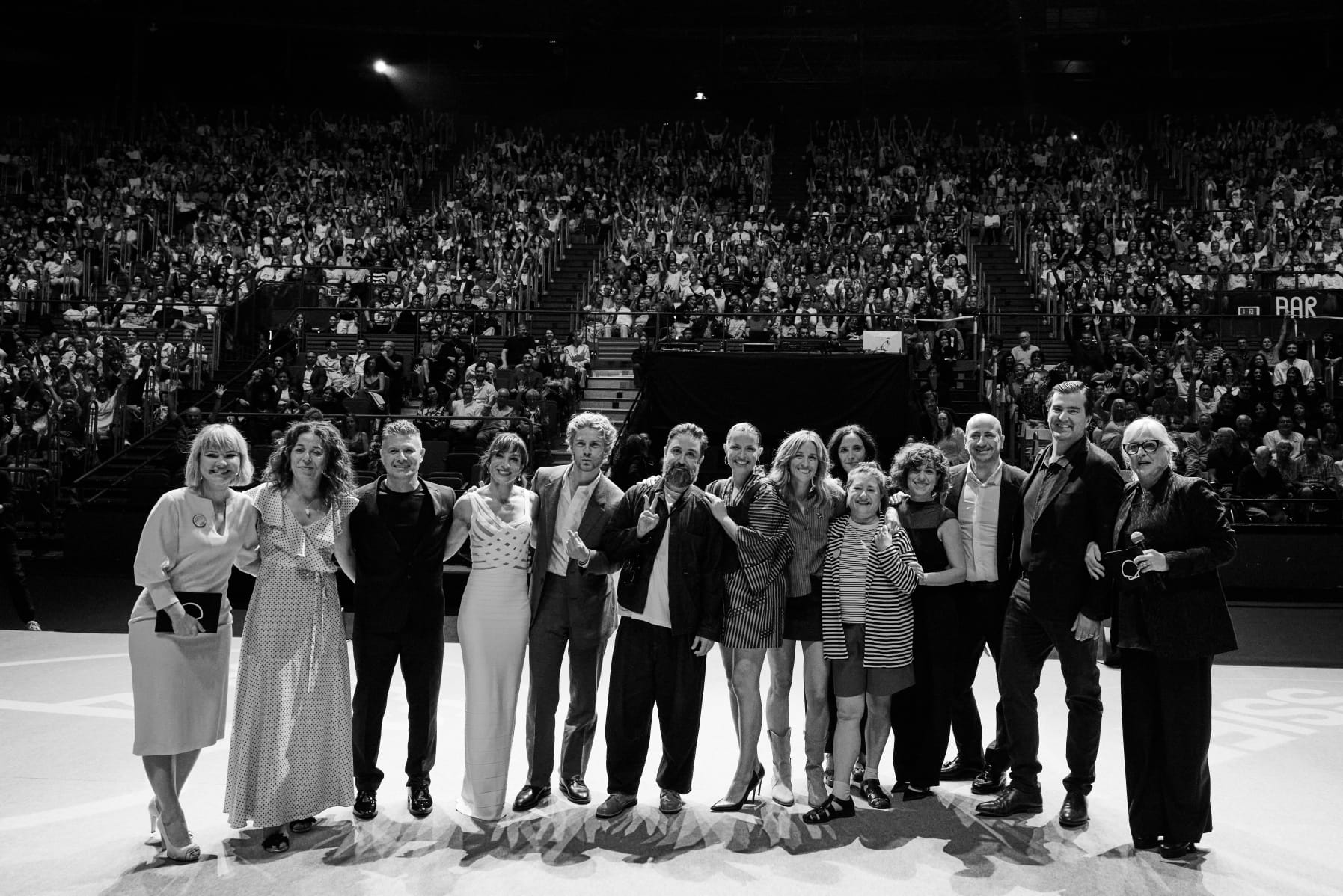
Snchez and del Moral attended the festival alongside members of the cast, the director, and the production crew. WKFs report confirms their presence without listing names. This magazine piece stays inside that boundary: the premiere is documented; the credits are left to the films own materials and future coverage based on primary sources that name them.
What matters for karate’s public image is the image itself — athlete and coach on a festival night, a biopic already screened, an audience that clapped early and stood long.
Spanish cinemas on 30 October
The festival night is the opening chapter, not the last. Following the San Sebastián premiere, Karateka will be released in Spanish cinemas on 30 October, distributed by Warner Bros. Pictures Spain. That date moves the story from a festival audience to a national theatrical window and, in Espinós’s words, toward the hope of a wider global release.
For international readers, the sequence is simple: Velodrome Section on 21 September; Spanish theatrical release on 30 October; a film that asks whether the emotions of kata can survive the cut from tatami light to cinema dark. Sánchez’s answer from San Sebastián is already on the record. The next answer belongs to the people who will fill those Spanish theatres — and, later, to whoever meets Karateka beyond Spain.
Until then, the facts stand without embroidery. A first Olympic kata champion. A biopic titled Karateka. A San Sebastián premiere that earned a standing ovation measured in minutes, not gestures. And a theatrical date that will test whether a sport’s private language can hold a public room.
Sources
- WKF — Sandra Sánchez’s Karate Journey Comes to the Big Screen at San Sebastián Film Festival (25 September 2026)
-
- Photo: wkf.net (Sandra_Sanchez_Film.jpg — Sandra Sánchez at San Sebastián International Film Festival)