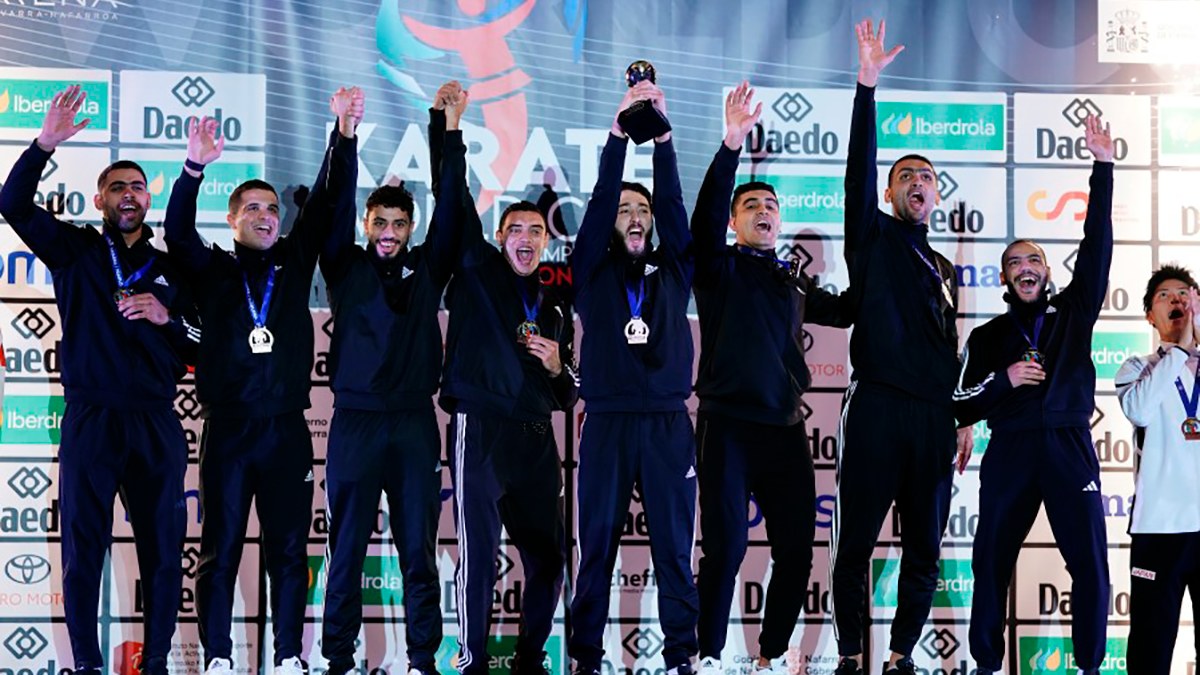

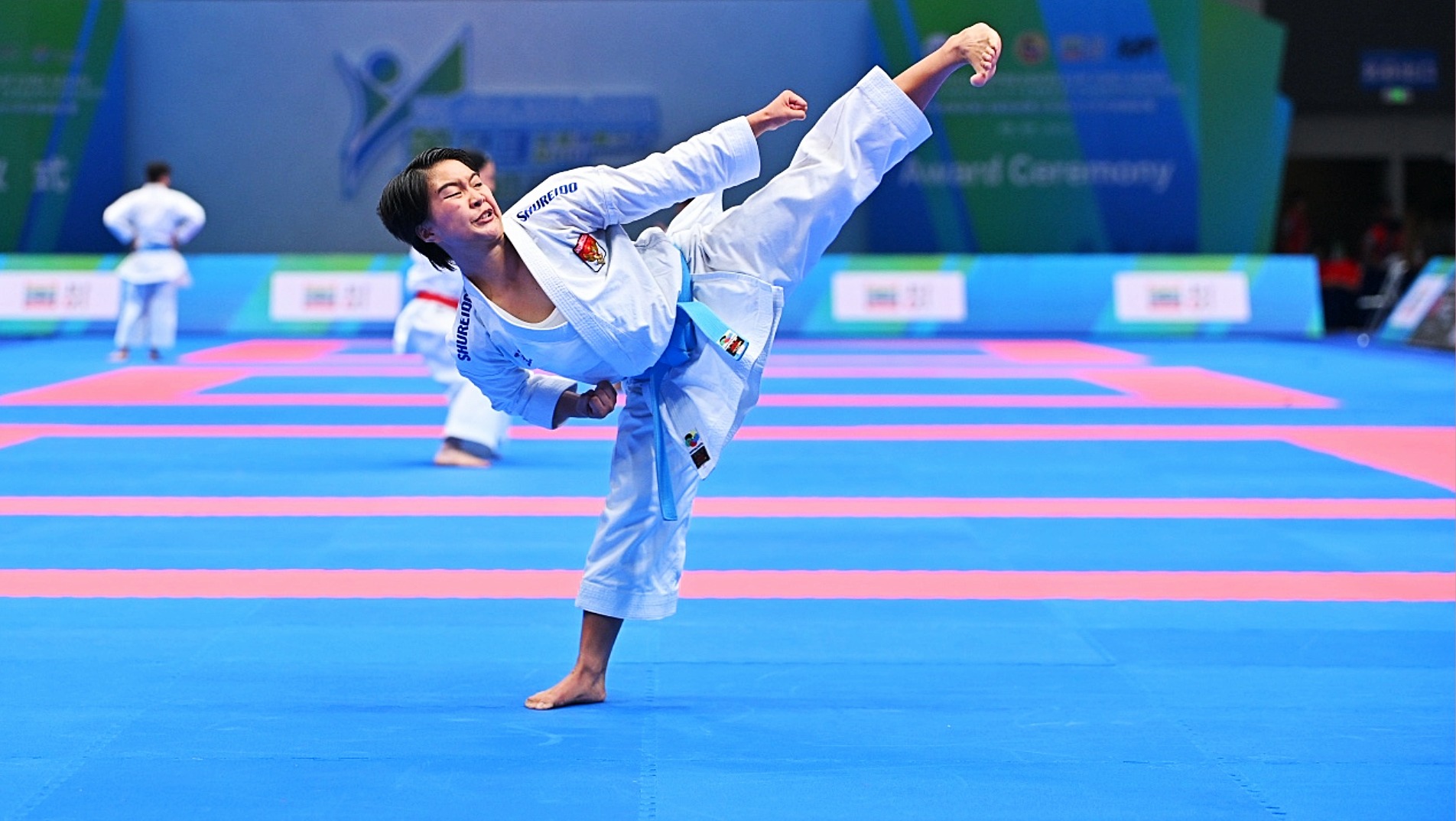
On Tuesday 8 September 2026, Asias youth continental steps from preparation into competition. In Amman, Jordan, the 2026 AKF Cadet, Junior & U21 Championships — the 24th Asian Cadet, Junior & U21 Karate Championships in host wording — open a four-day window framed by the World Karate Federation and the official bulletin as 8–11 September, under the public tag #KarateAmman2026. This is not another calendar stack preview, and it is not the ministry-eve diplomatic brief. Day 1 is the field as published, the programme as scheduled, and the Shaoguan backdrop against which Amman’s week will be read — without inventing a single bout result, score or medal from the opening tatami.
Nearly 400 athletes, 21 countries
The WKF’s competition-week preview, published on 7 September 2026, sets the scale in plain language: nearly 400 young karate athletes from 21 countries. That is the line to lead with as Cadet titles open. Earlier host-side estimates had spoken differently — Petra’s early September snapshot placed the gathering at roughly 350 athletes from about 30 countries, and Oman Observers eve despatch cited 351 from 30 Asian countries. The discrepancy is worth recording, not merging. For the Day 1 opener, the fresher WKF figure — nearly 400 from 21 national federations is the competition-week official field; the older ~350 / ~30 band remains an earlier host-side estimate, not a silent substitute.
The concrete hall, where Petra supplies a name the WKF preview does not, is the Arena Complex in Al Hussein Youth City, Amman. The bulletins extracted championship-venue line stays generic; the host wires Arena Complex naming is the detail retained when the building must be named. Cadet weigh-ins, per the bulletin, were already scheduled for 7 September at the Championship Venue; juniors weigh in on the morning of Day 1 itself, 09:30–10:30, before the Cadet programme fills the tatami.
Iran 41, Jordan 40, Chinese Taipei 39
Three delegations sit at the top of the published numbers, and they sit close together. Iran fields the largest squad, with 41 athletes. Hosts Jordan follow with 40. Chinese Taipei are third, with 39. That triad — Iran, Jordan, Chinese Taipei — is the numerical headline of the Amman field as the WKF framed it on the eve of competition. No full country-by-country entry table is published in that preview; inventing one would be invention. What the numbers already say is enough: the hosts are among the densest deployments on home tatami, and two East and West Asian heavyweights of the youth pathway arrive with almost identical squad sizes.
The karategi now filling Al Hussein belong to Cadet, Junior and U21 pathways — kata and kumite across age bands that feed the continent’s senior programmes. Day 1 does not ask who will win. It asks who has brought depth, and the answer, in headcount alone, begins with Iran, Jordan and Chinese Taipei.
Cadet kata, Cadet kumite, Junior team kata
The WKF’s day-by-day summary is clear for the opening date. 8 September is devoted to Cadet Kata and Kumite divisions, alongside Junior Team Kata, with the opening ceremony also scheduled on the first day. The bulletin’s operational grid sharpens that picture without inventing clock times beyond what it lists: Cadet male and female kata pools; Junior male and female team kata pools; Cadet kumite preliminaries through the bronze path across the listed weight categories — men -52 / -57 / -63 / -70 / +70, women -47 / -54 / -61 / +61; kata bronze and finals blocks; a Cadet kumite finals block; and an opening ceremony plus award-ceremony window placed at 17:30–19:00.
That is the spine of Day 1: Cadet individual kata and kumite as the competitive centre of gravity, Junior team kata as the parallel team thread, and ceremony as the public punctuation of the open. No start lists, no seeds, no predicted winners belong here. The programme is the story until results exist to report — and this piece invents none.
Juniors next, U21 across two days
What follows is already mapped. 9 September, day two in the WKF summary, is dedicated to Junior Kata and Kumite categories — with the bulletin placing U21 weigh-in that morning and Junior competition through finals and an award ceremony in the late afternoon. 10 September is the day U21 divisions, in the WKF’s phrasing, “take centre stage.” The bulletin’s finer grain matters for honest framing: U21 competition starts on 10 September with male and female kata pools and kumite preliminaries through repechage, and concludes on 11 September with U21 bronze then finals in kata and kumite, plus the award ceremony. Prefer that two-day U21 frame over flattening the age band into a single date.
The competition window itself remains 8–11 September on the WKF championship page and in the bulletin. Petra’s 1 September national-teams brief once cited a shorter 8–10 September span — a host-side discrepancy already flagged in earlier Amman copy and not settled by inventing a final-day ruling here. Lead with the WKF and bulletin window; note the shorter Petra end date only as ambiguity.
Shaoguan 2025: golds, totals, progress
Amman inherits a medal-table memory from the previous edition. The WKF’s Amman preview recalls Shaoguan (China) 2025 — confirmed as the prior host on the championships page — with a careful reading that refuses to flatten golds into totals. Japan topped the standings with 19 medals, including 12 golds. Iran followed with 22 medals — more medals in total than Japan, while Japan led the standings through golds. Saudi Arabia claimed 12 medals. No further gold/silver/bronze splits for Iran or Saudi Arabia appear in that preview; inventing them would be invention.
The WKF’s context line is forward-looking without forecasting: results in Amman will indicate which countries are making the strongest progress through grassroots programmes. That is the analytical hinge of the week — not a prediction of who stands where on Day 1, but a reminder that youth continentals measure pathway depth as much as podium colour. Japan’s gold lead and Iran’s medal volume at Shaoguan set one frame; Amman’s field density, with Iran again at the head of the numbers and Jordan and Chinese Taipei packed immediately behind, sets another. The week will write the rest on the tatami.
Field set, programme open
So the Amman opener stands where the sources allow it to stand. Nearly 400 athletes from 21 countries; Iran 41, Jordan 40, Chinese Taipei 39; Cadet kata and kumite plus Junior team kata and the opening ceremony on 8 September; Juniors on 9 September; U21 from 10 to 11 September; Shaoguan’s Japan–Iran–Saudi Arabia memory in the rear-view; Al Hussein Youth City’s Arena Complex as the named host hall. No Day 1 scores. No invented medalists. No fabricated Espinós quotation from a WKF preview that contains none. The field is set. The Cadet titles are open. Asia’s youth continental is under way in Amman under #KarateAmman2026.
in Amman will indicate which countries are making the strongest progress through grassroots programmes. That is the analytical hinge of the week — not a prediction of who stands where on Day 1, but a reminder that youth continentals measure pathway depth as much as podium colour. Japan’s gold lead and Iran’s medal volume at Shaoguan set one frame; Amman’s field density, with Iran again at the head of the numbers and Jordan and Chinese Taipei packed immediately behind, sets another. The week will write the rest on the tatami.
Field set, programme open
Sources
- WKF — Asia’s best young karate athletes ready for 2026 AKF Cadet, Junior & U21 Championships in Amman (7 Sep 2026)
-
- WKF bulletin extract:
/workspace/amman/bulletin.txt(programme Days 1–4, weigh-ins, dates)
- WKF bulletin extract:
-
- Featured image:
/workspace/featured-amman-day1-wkf.jpeg— photo credit wkf.net / WKF
- Featured image: