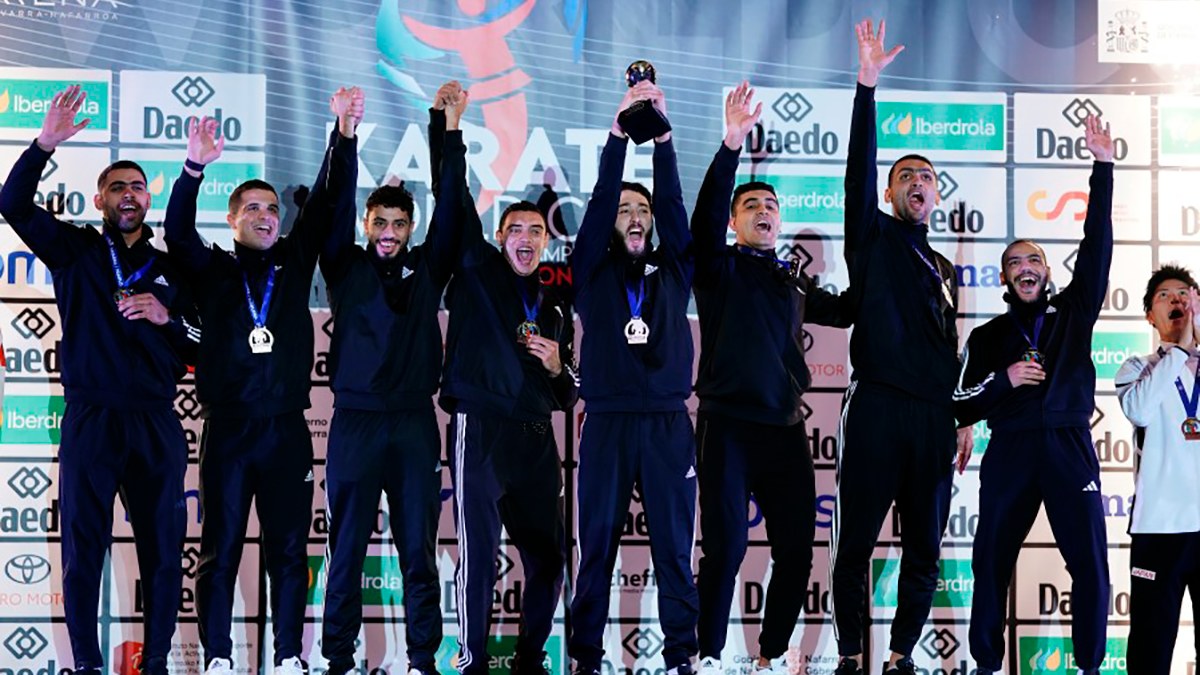

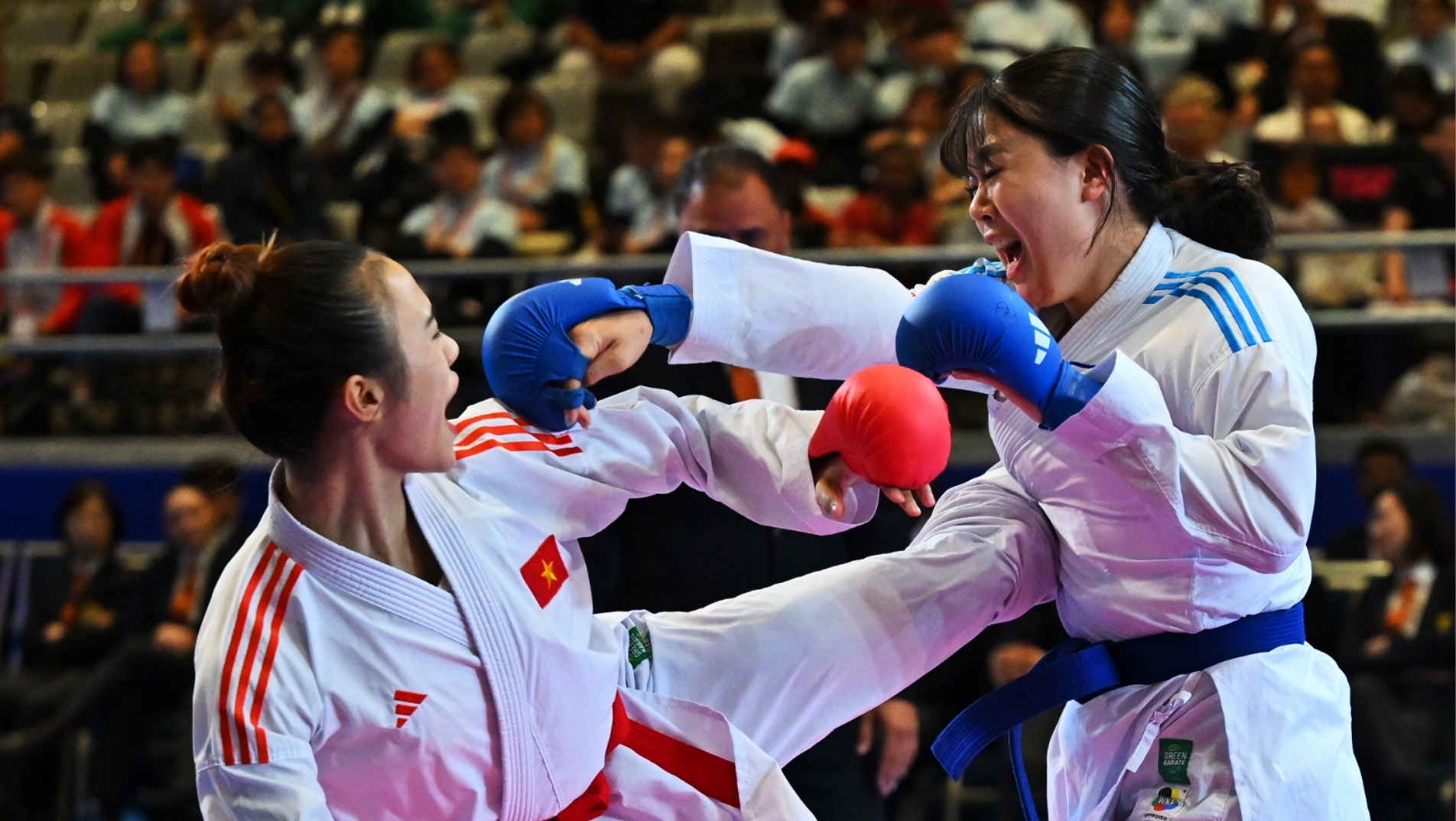
Asia's multi-sport calendar turns to Aichi Prefecture this morning, and karate is already inside the frame. The 20th Asian Games Aichi-Nagoya open their karate programme on 20 September 2026 at Toyohashi Gymnasium, where 177 athletes from 34 countries will chase Asian Games titles across four days. The World Karate Federation's briefing of 19 September sets the scale without dressing the Games as a federation showcase: continental multi-sport first, karate as one sport on a wider programme. The Youth League stop in Guadalajara already sits on the karate.news file; this week belongs to another map entirely — senior Asian Games elite, four days in Toyohashi, medals measured against Hangzhou's memory.
Four days on the Games calendar
Competition runs from Sunday 20 to Wednesday 23 September. That is the karate window inside the Aichi-Nagoya Games, not a freestanding continental championship. The Olympic Council of Asia and the Aichi-Nagoya organisers hold the multi-sport stage; karate fills one hall of it. For athletes who have spent the year on Premier League tatami or national trials, the Asian Games remain a different temperature: national colours, Games medals, and a continental public that reads karate beside swimming, athletics and the rest of the programme.
Four days is long enough for a full individual map and short enough that every session matters. There is no leisurely midweek recovery for a federation that has entered both kata and kumite. The clock is the Games clock — shared venues, shared transport, shared attention and Toyohashi is where Asia's karate field has to answer it.
Toyohashi Gymnasium
The official Games site places the venue in Toyohashi City's General Sports Park: a municipal gymnasium opened in 1989, used for indoor sports and concerts, with roughly 3,000 spectator seats across the first and second floors. During these Games, the same hall carries karate and taekwondo. That pairing is practical architecture, not a hierarchy. For spectators, it means a compact arena with clear sightlines and a capacity that rewards proximity over spectacle for its own sake.
Toyohashi sits in Aichi Prefecture, away from the Nagoya skyline that gives the Games their joint name, yet firmly inside the host geography. Athletes will feel the municipal scale: a park, a gymnasium, a city that has hosted indoor sport for decades. The Asian Games do not need a purpose-built karate palace to make the week matter. They need a reliable floor, enough seats, and a draw that treats every bout as continental currency. Toyohashi Gymnasium, on the organiser's own description, is built for that.
One hundred seventy-seven, thirty-four countries
WKF puts the field at 177 athletes from 34 countries. Those numbers already tell the story a preview can hold. This is not a closed club of three or four powerhouses. Thirty-four flags mean depth across Central Asia, East Asia, Southeast Asia and West Asia — enough for early rounds that refuse to be ceremonial, enough for favourites to meet resistance before a final. National teams arrive with Games selection pressure: some federations send a narrow elite; others spread across kata and kumite to harvest every available medal lane.
What a kickoff cannot invent is the daily scoreboard. Opening day will produce its own eliminations, its own surprises, its own first Asian Games champions of the week. Until those bouts are complete and verified, the file stays on field, venue and programme. The medal table of Aichi-Nagoya 2026 will be written on the tatami, not in a preview sentence.
Full individual map, plus team kata
The programme, per WKF, includes all individual kata and kumite divisions, as well as men's and women's team kata. That is the complete individual spine plus the team kata events — a structure that lets specialists and all-rounders share the same Games week. Individual kata asks for precision under a Games jury. Individual kumite asks for control and timing against continental opposition in every weight division on the programme. Team kata adds the synchronised pressure that only three athletes sharing one score can feel.
Asia's karate federations know this architecture. The Asian Karate Federation sits as the continent's governing body for the sport, but the Games themselves are not an AKF championship by another name. They are multi-sport medals under the Aichi-Nagoya banner. That distinction matters for readers who follow both the continental championships and the Games cycle: same athletes often, different stage, different medal.
Hangzhou's shadow on the medal table
The last Asian Games karate programme was in Hangzhou, China, in 2022. WKF's own legacy line is clear and numbers-only: Kazakhstan topped the karate medal table with eight medals, including three golds. Japan finished second with four medals and three golds. Hosts China claimed three medals, including two golds. Those figures are the verified memory the field carries into Toyohashi — not a forecast of who repeats them, not a ranking of who "should" win in 2026.
Kazakhstan's breadth in Hangzhou remains the benchmark for a federation that can score across divisions. Japan's gold density — three golds from four medals — remains the benchmark for conversion when the final is reached. China's home haul of two golds from three medals showed what host pressure can still deliver. Aichi-Nagoya puts Japan on home soil again, in a different prefecture and a different Games edition. Home advantage is atmosphere and logistics; it is not a prepaid gold column. Kazakhstan, China and every other entered nation arrive under the same four-day rules.
Why the Asian Games still move the needle
Premier League stops and world championships set weekly and biennial temperatures. The Asian Games set a rarer one: a continental multi-sport medal that national Olympic and sports committees read beside every other sport on the programme. For a karate athlete, an Asian Games title is a career hinge that travels beyond the tatami community. For a federation, the medal table is a public document that funds, selection and prestige all notice.
That is why 177 athletes and 34 countries matter on opening morning. The field is large enough to be continental, small enough to stay sharp. The venue is municipal and specific. The programme is complete for individuals and open for team kata. Hangzhou's table — Kazakhstan eight, Japan four, China three — hangs in the air as history, not as a script. From 20 to 23 September, Toyohashi Gymnasium holds Asia's karate week inside the 20th Asian Games. The elite is here. The four days begin.